


Many women begin searching for answers long before they realise they are entering perimenopause. Questions like “How do I know I have entered perimenopause?”, “At what age does perimenopause start?” and “Why do I suddenly feel different after 40?” are becoming increasingly common. The truth is that perimenopause is not something that begins overnight. It is a gradual transition where your hormones, emotions, energy levels and menstrual cycle begin to change. While the average age for perimenopause is in the early to mid forties, every woman’s experience is unique.
One of the simplest yet most powerful ways to prepare for perimenopause is not through another supplement or another diet. It begins with understanding your own body. Learning to observe your menstrual cycle, your emotions, your energy and your body’s natural rhythm helps you move into this transition with awareness instead of fear. The more familiar you become with your body’s patterns today, the more confidently you can navigate the changes that come tomorrow.
If you are reading this and wondering whether you are approaching perimenopause, experiencing menopause symptoms, or simply wanting to understand your body better, this practice can become one of the greatest gifts you give yourself.
Before reading further, I encourage you to explore these two articles where I explain the wisdom of the menstrual cycle and the different seasons of a woman’s life.
- Womb – A Deep Connect With Who You Are
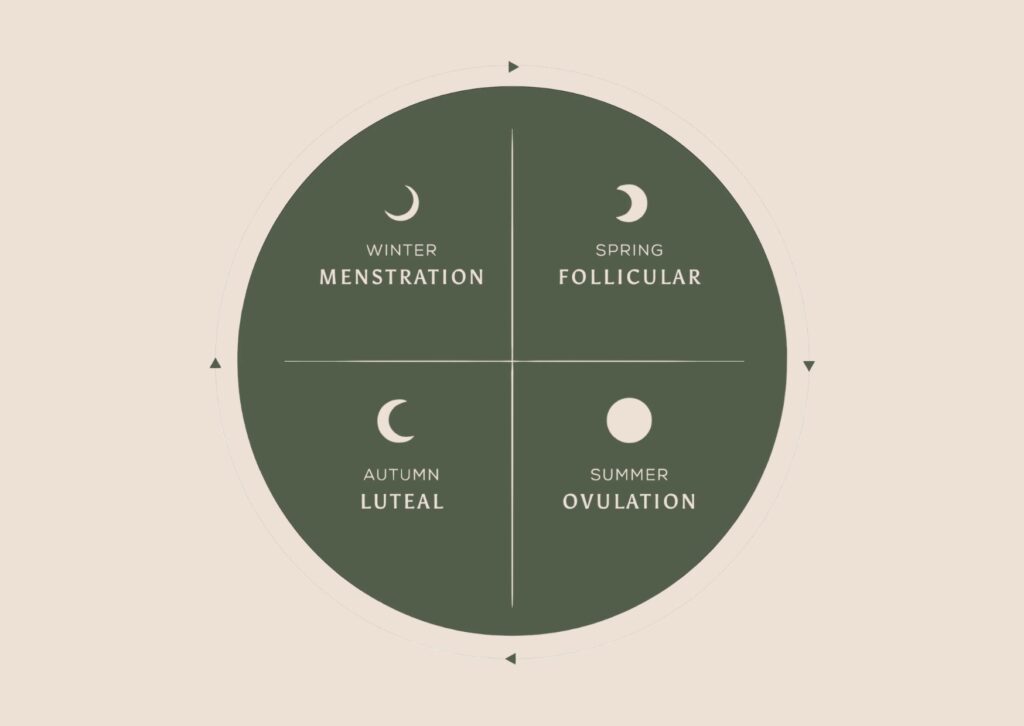
- Menstrual Cycle and Menopause: Understanding the Wisdom of Your Womb Through Every Life Stage
These articles will help you understand why our menstrual cycle is far more than just our monthly period. It is one of the most beautiful ways our body communicates with us.
Why Did I Start Tracking My Menstrual Cycle?
Looking back, my relationship with my menstrual cycle has changed with every decade of my life.
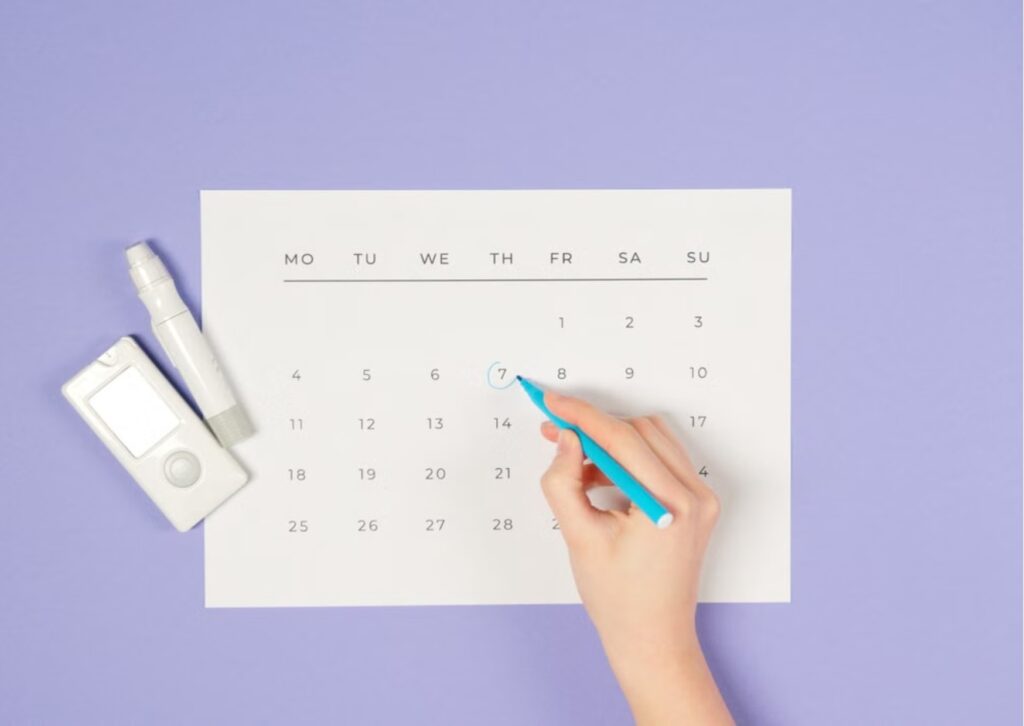
During my twenties, charting my periods was simply about convenience. Like many young women, I would mark the expected date on my phone calendar so I knew when my next period was due. I wasn’t trying to understand my hormones or learn about my body. I simply wanted to avoid being caught by surprise.
In my thirties, charting became much more intentional. I was trying to conceive, and suddenly every appointment with my doctor revolved around dates, ovulation and fertile windows. I remember prescriptions that had the letters IC written beside my supplements. It simply meant intercourse. Something as personal and intimate as creating life slowly became reduced to dates, timings and instructions. My menstrual cycle became something I monitored for fertility, but I still wasn’t learning what my body was trying to communicate beyond pregnancy.
Everything changed when I entered my forties.
My periods were no longer just dates on a calendar. They became an anchor that helped me understand myself. I started noticing how my emotions changed throughout the month. My energy would rise and fall. Some weeks I felt creative and connected, while other weeks I longed for silence, rest and solitude. The more I observed these patterns, the more I realised that my body had always been communicating with me. I simply had never been taught how to listen.
Charting my menstrual cycle became much more than recording the day my period arrived. It became a practice of coming home to myself.
Why Is Menstrual Cycle Awareness So Important Before Perimenopause?
Many women believe that tracking their menstrual cycle is only useful when they are trying to conceive.
I used to believe that too.
Today, I know it is one of the most valuable practices a woman can develop at any stage of life.
Our menstrual cycle is much more than a monthly event. It is a reflection of our physical health, emotional wellbeing and hormonal balance. Every phase of our cycle offers valuable information about how we are feeling, how we are responding to stress and what our body may need.
When we begin paying attention to these patterns, we stop seeing our emotions as random.
We begin recognising that our body has its own rhythm. Instead of asking ourselves,
“Why am I so emotional today?”
or
“Why can’t I stay productive all month?” we begin asking a very different question.
“What is my body trying to tell me today?”
That single shift changes our entire relationship with ourselves. Instead of fighting our biology, we begin working with it.Instead of criticising ourselves, we become curious.
That curiosity creates awareness. Awareness creates trust.
And trust creates a sense of safety within ourselves that becomes incredibly valuable during the transition into perimenopause.
How Does Menstrual Cycle Tracking Prepare You for Perimenopause?
One of the questions I hear most often is,
“How do I prepare for perimenopause?”
My answer is always surprisingly simple. Start listening to your body before it starts shouting.
Perimenopause rarely begins suddenly. For many women, the earliest changes are so subtle that they are easy to dismiss. Your sleep may change before your periods do. You may feel emotionally sensitive, notice changes in your confidence, struggle with concentration or feel more tired than usual. These are often the whispers that your body is beginning a new phase of life.
When we have spent years observing our menstrual cycle, these changes become easier to recognise. They feel less frightening because we already understand that our body speaks through patterns.
Charting teaches us to trust those patterns. It reminds us that change does not always mean something is wrong. Sometimes change simply means our body is preparing us for the next chapter of womanhood.
That is why I often tell women that preparing for perimenopause does not begin in your forties. It begins the day you decide to start paying attention to yourself.
Can You Start Tracking Your Menstrual Cycle If You Have Already Entered Perimenopause?
One of the concerns I hear most often from women is, “My periods have already become irregular. Is it too late to start charting?”
My answer is always the same.
It is never too late to begin understanding yourself.
Many women enter perimenopause feeling as though their body has suddenly become unpredictable. Their menstrual cycle may become shorter, longer, heavier, lighter, or skip a month altogether. Alongside these changes come emotional shifts, disturbed sleep, brain fog, mood changes, anxiety, fatigue, and a growing sense that something feels different.
Because these changes can appear gradually, many women begin questioning themselves before they question their hormones.
They wonder if they have become less capable. They wonder why they are suddenly more emotional. They wonder why they cannot cope with life in the same way they always have.
The truth is that your body is not failing you.
It is communicating with you.
Even if your menstrual cycle has become irregular, there is still so much information available every single day. Your energy, your mood, your sleep, your cravings, your emotions, and your physical symptoms all become part of the conversation your body is trying to have with you.
Charting is no longer about predicting your next period. It becomes a practice of observing yourself with honesty and kindness

Why Is Menstrual Cycle Charting So Powerful During Perimenopause?
Over the years, I have realised that the greatest benefit of charting is not that it helps you predict your menstrual cycle. It helps you stop judging yourself.
As women, we are often taught to expect the same level of productivity every single day. We compare ourselves with yesterday, with other women, and with unrealistic expectations of what we should be able to achieve.
But our bodies were never designed to function exactly the same way every day.
Some days we naturally have more energy.
Some days our creativity flows effortlessly.
Some days we long for connection.
Other days we long for solitude. When we ignore these natural rhythms, we begin believing there is something wrong with us. When we understand them, we begin responding to ourselves with compassion instead of criticism. That is one of the greatest lessons menstrual cycle awareness has taught me. It has shown me that my body is not working against me.
It is always working for me.
The more I listen to it, the more supported I feel.
What Can Menstrual Cycle Tracking Teach You About Yourself?
As you begin recording your daily experiences, something beautiful starts to unfold.
Patterns begin to appear.
You start recognising which part of your menstrual cycle brings you clarity and confidence. You begin noticing when you naturally feel more emotional or sensitive. You understand which days require more rest and which days inspire action.
Slowly, you stop living according to the expectations of the outside world and begin living in harmony with your own internal rhythm.
Charting also teaches us something that many women have never been encouraged to practice. It teaches us to validate our own experience. Instead of asking someone else whether what we are feeling is normal, we begin noticing our own patterns. Instead of dismissing our emotions, we become curious about them. Instead of forcing ourselves to keep going, we learn when our body genuinely needs rest.
This awareness becomes incredibly valuable as we move through perimenopause because every woman experiences this transition differently.
There is no universal timeline. There is no perfect checklist.
There is only your body and the wisdom it is offering you every single day.
If you have already read my previous article on Why Does Perimenopause Make You Question Everything? The Emotional Wisdom Hidden Within Menopause, you may remember how I spoke about the inner voice that became louder as I entered my forties. Charting helped me understand that voice rather than silence it. It helped me recognise that my emotions were not obstacles to overcome. They were invitations to pay attention.
How Did One Woman Completely Change Her Relationship With Herself?
I would love to tell you about one of my clients, Priya.
Priya is a 38 year old working mother with two young children. Like many women, she was constantly balancing work, family, household responsibilities, and caring for everyone around her.
When she first came to me, she wasn’t looking for support with perimenopause or hormonal health. She wanted help becoming more productive. She described herself as inconsistent.
Some weeks she felt focused, energetic, and confident. She could complete her work with ease, enjoy time with her family, and still have energy left for herself.
Then, without warning, everything would change.
She would wake up feeling physically exhausted. Her motivation disappeared. She became irritable and emotionally overwhelmed. Even small decisions felt difficult. The way she spoke to herself during those days was heartbreaking.
“Why can’t I stay consistent?”
“What is wrong with me?”
“Why was I so productive last week but not today?”
“Why do I keep letting myself down?”
She believed she had a discipline problem. I believed she had an awareness problem. So instead of teaching her productivity techniques, I asked her to do something much simpler. I asked her to observe herself. For the next few months, I encouraged her to record just a few things each day.
She noted her energy. She wrote down how she felt emotionally. She tracked her menstrual cycle. She noticed her sleep. She observed her physical symptoms. At first, it felt like a pointless exercise.
Then something remarkable happened.
Patterns began to emerge.
The days she labelled herself as lazy almost always appeared during the second half of her menstrual cycle. The days she naturally felt confident and productive appeared during the first half. For the first time in her life, she realised that she wasn’t inconsistent. She was cyclical and that single realization changed everything.

How Did Charting Change Priya’s Life?
As Priya continued charting her menstrual cycle, something much deeper than awareness began to emerge.
She stopped trying to fight herself.
Instead of pushing through every difficult day, she started planning her life around her body’s natural rhythm. On days when she knew she usually felt more energetic, she scheduled important meetings, creative work, and projects that required focus. During the days when she naturally felt more inward and emotionally sensitive, she became gentler with herself.
She began preparing simple meals in advance on days when she knew she might not have the energy to cook. She gave herself permission to sleep a little longer when her body asked for rest. She reduced unnecessary social commitments and stopped feeling guilty for saying no.
Most importantly, she began talking openly with her family.
Instead of silently carrying everything herself, she explained that there were certain days each month when her body genuinely needed a little more support. To her surprise, her family understood. They weren’t expecting perfection from her. She had been expecting it from herself.
As the months passed, another beautiful shift happened.
Charting gave Priya language.
Before, she would wake up thinking,
“I’m a mess today.”
“I’m failing.”
“I can’t seem to cope.”
Now she found herself saying something very different.
“Today I need a slower pace.”
“My body is asking for rest.”
“I know this feeling. It will pass.”
Nothing about her circumstances had changed. But everything about her relationship with herself had. That is the true power of awareness. It is not about controlling your body. It is about understanding it.
What Should You Track During Perimenopause?
Many women ask me what they should actually write in their journal. The good news is that it doesn’t need to be complicated. You don’t need a special app, an expensive planner, or a perfect system.
A simple notebook is enough.
The purpose of charting is not to collect information. It is to become more present with yourself.
Each day, spend just a few minutes noticing what your body is trying to tell you.
You may like to write down:
- How am I feeling emotionally today?
- How is my energy?
- Did I sleep well?
- Am I experiencing any pain or discomfort?
- Have I noticed any changes in my menstrual cycle?
- Have I made any changes to my food, movement, or daily routine?
- Am I craving certain foods today?
- How is my digestion?
- What is causing me stress today?
- Is there anything my body seems to need right now?
Over time, these small observations become incredibly valuable.They help you identify patterns that would otherwise go unnoticed.
You begin recognising what supports your body and what drains it.You start responding to yourself with greater wisdom and much less judgement.
At What Age Does Perimenopause Usually Start?
One of the most common questions women search online is, “At what age does perimenopause start?”
For most women, perimenopause begins sometime during their forties, although some may notice changes in their late thirties while others may not experience symptoms until their late forties.
There is no perfect age.
There is no exact timeline.
This is why comparing yourself with someone else’s experience often creates unnecessary worry. Rather than asking whether your experience is normal, I encourage you to ask a different question.
“What is my body trying to tell me?”
Some women notice changes in their menstrual cycle first. Others notice emotional changes.
Some experience disturbed sleep, increased anxiety, brain fog, or changes in energy before their periods become irregular. Every journey is different.
Your awareness matters more than your age.
The earlier you begin listening to your body, the easier it becomes to recognise these changes with confidence rather than fear.
How Do You Know If You Have Entered Perimenopause?
There is no single symptom that confirms you have entered perimenopause. Instead, it is usually a combination of changes that gradually begin appearing over time.
You may notice:
- Changes in the length or flow of your menstrual cycle.
- Emotional sensitivity that feels different from before.
- Disturbed sleep.
- Brain fog or difficulty concentrating.
- Anxiety or mood changes.
- Fatigue despite getting enough rest.
- Changes in energy throughout the month.
- Feeling as though your body is changing in ways you cannot quite explain.
If these experiences sound familiar, remember that you are not alone.
More importantly, remember that these symptoms are not something to fear.
They are invitations to become more deeply connected with yourself.
Preparing for Perimenopause Begins Long Before Menopause
One of the greatest misconceptions about menopause is that preparation begins once symptoms become difficult.
In my experience, preparation begins much earlier.
It begins the day you start listening to yourself.
When you understand your menstrual cycle, your emotions, and your body’s natural rhythm, you slowly build trust in yourself.
That trust becomes one of the greatest gifts you carry into perimenopause and menopause.
You become less frightened by change because you understand that change has always been part of being a woman.
Your body has never stopped communicating with you.
It simply changes the language as you move through different seasons of life.
A Gentle Invitation to Every Woman
If there is one thing I hope you take away from this article, it is this. Your body is not asking you to become someone else. It is inviting you to know yourself more deeply. You do not need to have all the answers today. You do not need to understand every hormone or every symptom.
You simply need to begin paying attention. Notice your energy. Notice your emotions. Notice your menstrual cycle. Notice what brings you peace. Notice what leaves you feeling depleted.
Little by little, your body will begin revealing patterns that no search engine, book, or doctor can ever fully explain for you. Those patterns belong to you.
They are your wisdom.
They are your guide.
As you begin this journey of awareness, I also invite you to read my earlier reflections on understanding the wisdom of the womb and the emotional changes that often arise during perimenopause.
- Womb – A Deep Connect With Who You Are
- Menstrual Cycle and Menopause: Understanding the Wisdom of Your Womb Through Every Life Stage
- Why Does Perimenopause Make You Question Everything? The Emotional Wisdom Hidden Within Menopause
Each article builds on the previous one because understanding your body is not something that happens in a single day.
It is a lifelong relationship.
And perhaps that is what perimenopause is truly inviting us into.
Not an ending.
Not something to fear.
But a deeper, kinder, and more compassionate relationship with ourselves.



Beautifully explained and will be helpful for so many women🙏🙏Thank you for sharing your wisdom Kala💕💕
Very well explained, and many of us have similar situation, writing definitely helps to understand what our body is Telling us and also want we need to express. Thank you Kala for this beautiful write up, it definitely help all of us.